The day in numbers
Most people who "eat healthy" are undereating protein by half and overeating fat without noticing. This is what a day looks like when neither of those things is happening.
The day is Jordan's work: a real plan of the kind he builds for clients, every ingredient weighed and every gram added up. I've laid it out here because seeing one honest day teaches more than any rule I could write.
Protein does the heavy lifting: just over half the day's calories. Carbs cluster around training and the evening meal. Fat is kept low on purpose, because fat is the macro that sneaks in uninvited (oil, cheese, dressings, "a little butter") and the one that's easiest to overshoot without feeling any fuller.
This is a day for a man with a lot of lean mass who is dropping fat. Your numbers will be different. The proportions are the lesson. From a biologist's point of view it's also a very old pattern: lean meat and fish, plants by the plateful, a starchy root, a little fruit. Swap the tortillas for roasted tubers and most of this day would make sense to a hunter-gatherer.
The four meals
The huge omelette
- Egg whites300 g
- Whole eggs2
- Chicken breast, cooked and diced200 g
- Green pepper, red pepper, onion50 g each
Tacos and a salad
- Small tortillas, 5 inch4
- 95/5 ground beef, cooked and drained200 g
- Light mozzarella-cheddar blend75 g
- Spring mix salad4 cups
The fish dinner
- Haddock250 g
- Green beans250 g
- Carrots, steamed250 g
- Potato200 g
Berry cake batter
- 0% plain Greek yogurt300 g
- Raspberries and blackberries50 g each
- Birthday-cake protein powder1 scoop
Any protein powder works for the snack. Pick one with almost no fat and almost no carbs, stir it into the yogurt, and it tastes like what the name says.
How to cook it
The food is simple. Jordan's cooking rules are what keep the numbers true, because the kitchen is where a 2,300-calorie day quietly becomes a 2,900-calorie day.
- Bake what you can
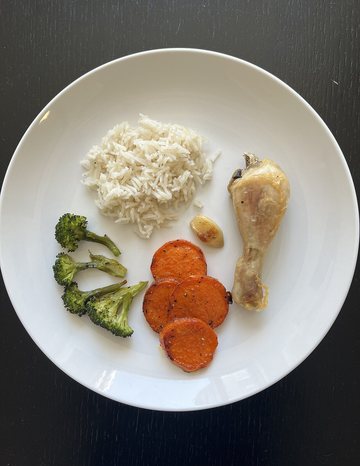
Chicken, fish and potatoes go on a sheet pan or into the air fryer. It's hands-off, it batches well, and nothing gets added that you didn't weigh. See the meal prep guide.
- Measure the oil, or skip it
A nonstick pan, parchment paper, or a spray does most jobs. If you use oil, brush on a little and log it. A tablespoon is 120 calories and 14 g of fat, and nobody logs the second one.
- Salt and pepper for taste
Then as much of any other spice as you like: paprika, cumin, chili, garlic powder, herbs. Spices are free.
- Read the seasoning label
Some blends carry real calories. Everything Bagel seasoning is the classic: it's full of seeds, and seeds are a dietary source of fat. If a shaker has sugar or seeds in the first few ingredients, log it.
Make it yours
Every number on this page can be scaled. Keep protein high, keep fat from creeping in, and move the carbs up or down to land on your own target. In the program, that scaling is Jordan's job: he builds your plan in week one. If you don't have a target yet, the Macro Counting Guide walks you through finding one in about twenty minutes.
Swap like for like. Haddock for cod, chicken for turkey breast, potato for rice, raspberries for strawberries. Swap across groups (chicken for salmon, say) and the macros move with it. The approved foods list is sorted so the swaps are obvious.
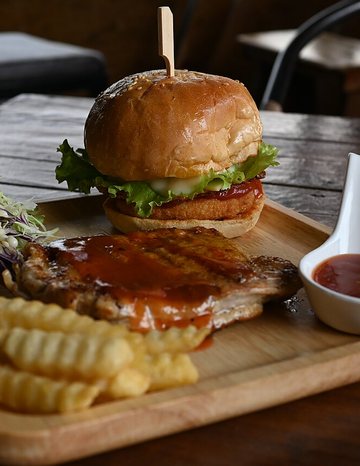
And when a day doesn't go to plan, which it won't, the cheat foods guide covers restaurants, drive-throughs and nights out without losing the week.





.jpg)
